

We’re excited to welcome our new postdoc Vivek Dixit to the group!
Together with Prof. Matteo Mitrano at Harvard University, we receive a new NSF grant supporting the theory and experiment for nonequilibrium superconductivity.
We’re excited to welcome our first postdoc Utkarsh Bajpai to the group!
We are awarded a one-year allocation from IonQ Inc. for quantum algorithms solving electron-phonon problems.
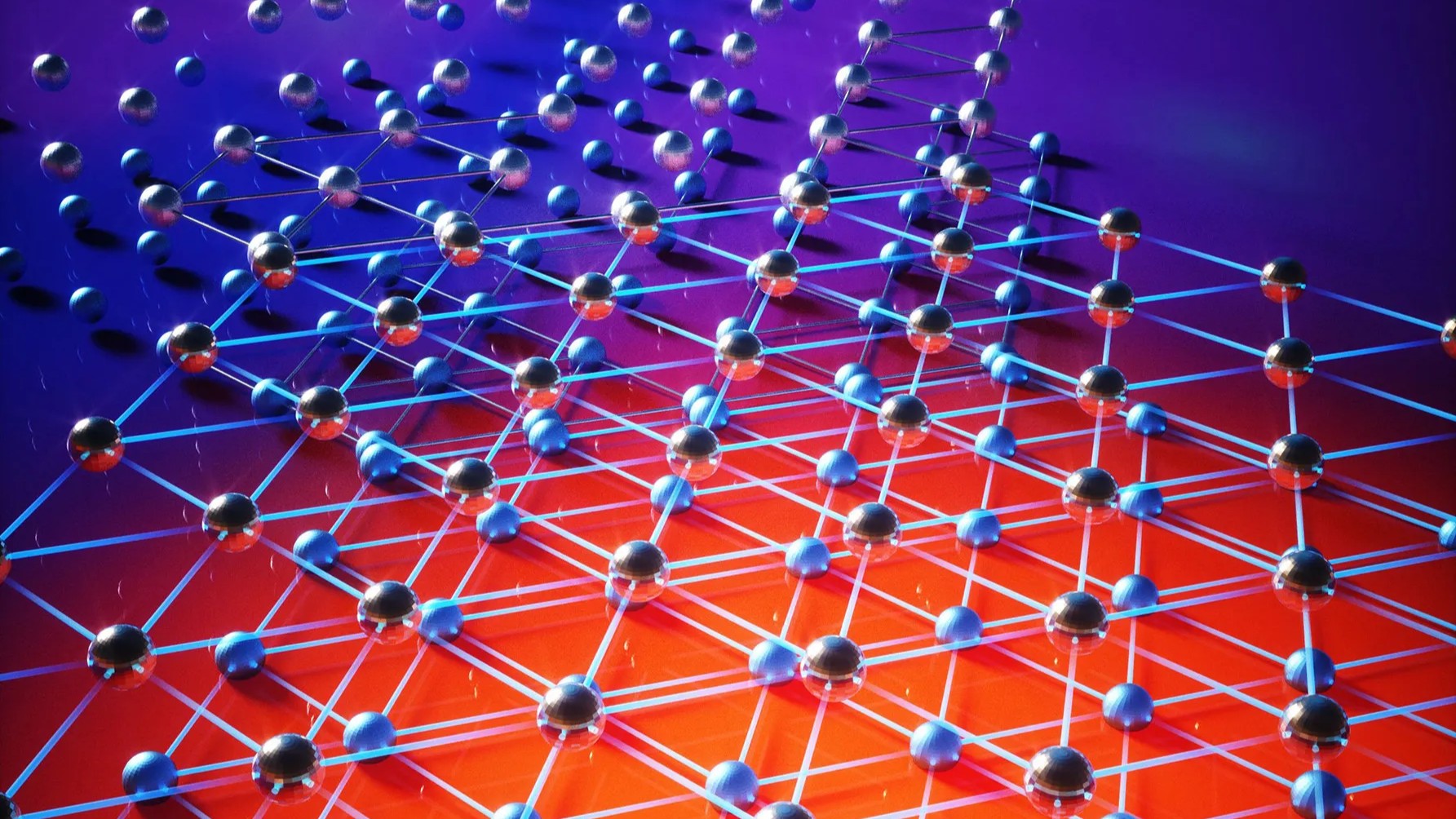
Our collaborative paper (with Prof. Hongkun Park and Prof. Eugene Demler) has been posted online at Nature! This work proposed and demonstrated an unambiguous route to identifying Wigner crystals in 2D materials, which is inherently guaranteed by the lattice commensurability and Löschian numbers theory.
We are selected as one of the 58 teams receiving the LRAC allocation award by the Texas Advanced Computing Center. This award will provide dedicated high-performance computing resources for scientific research. We are also one of the three selected condensed matter physics groups. See the news post at ClemsonNews.
We’re excited to welcome our intern undergraduate student, Shuhan Ding, to the group! Shuhan is currently a junior student at USTC.
We’re excited to welcome our first undergraduate student, Matthew Myers, to the group!
The Wang Group has been selected to receive a DOE Mission Science award allocation from the National Energy Research Scientific Computing Center (NERSC), a world-leading high-performance computing facility operated by the U.S. Department of Energy. This award provides dedicated and annually renewable high-performance computing resources to support our research in…
Read More
Our first single-PI grant with NSF officially starts today! We have the mission to develop advanced quantum many-body algorithms for electron-phonon systems in next three years.
Our new method, named variational non-Gaussian exact diagonalization (NGSED), is published at Physical Review Research! It solves strongly correlated electronic systems with strong electron-phonon coupling, revealing a superconducting state in the 2D Hubbard-Holstein model.
Our first independent paper is published at Communications Physics! It is also selected as the editor’s highlight. We start our collaboration with Prof. Mitrano group at Harvard University.
We establish our group in the Department of Physics and Astronomy at Clemson University.